
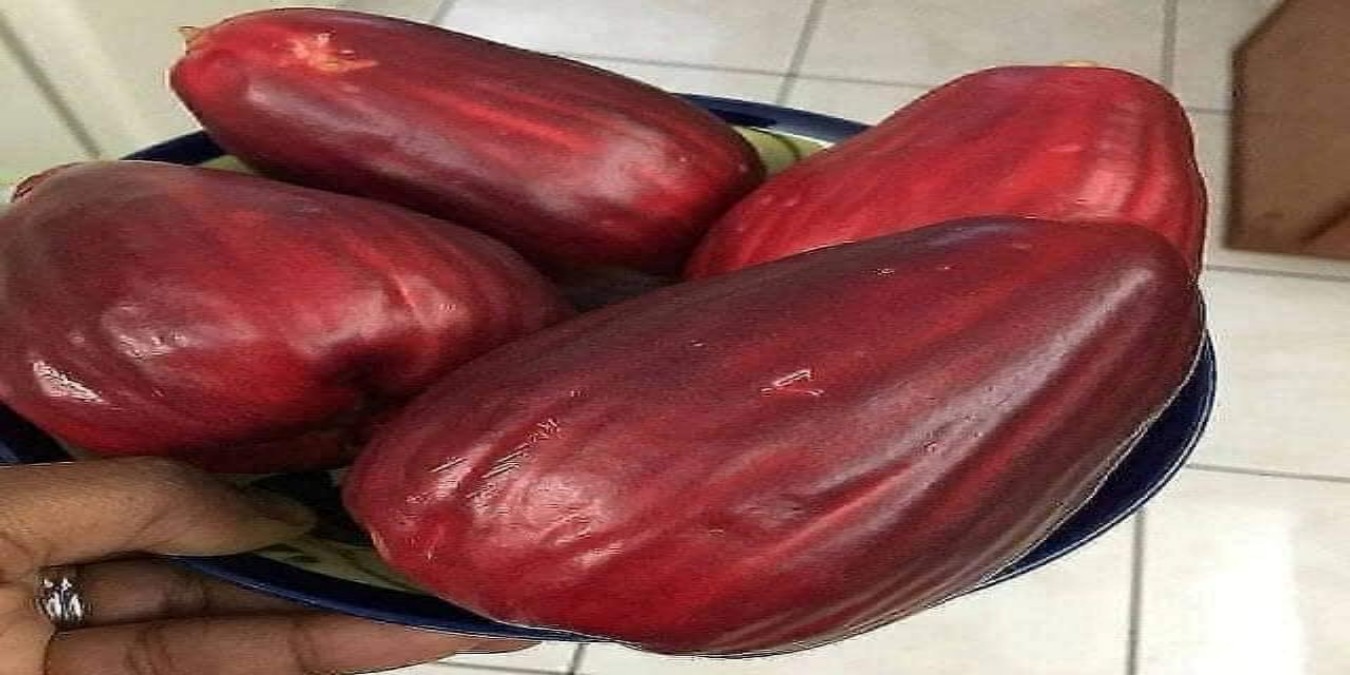
Pommerac, also known as Malay apple, has deep roots in Tobago’s food culture and Caribbean history. Though not native to the Caribbean, the fruit was introduced to Tobago during the colonial period, likely brought from Southeast Asia by European traders and settlers who transported plants across their colonies for food security and trade.
Over time, pommerac adapted perfectly to Tobago’s tropical climate and fertile soils. It became a common backyard fruit tree, especially in rural communities, where families relied on it as a seasonal staple. The fruit’s crisp texture, juicy flesh, and mild sweetness made it versatile, enjoyed fresh, stewed, or transformed into traditional preparations.
One of the most popular Tobagonian uses of pommerac is chow. When slightly underripe, the fruit’s firm texture and subtle tartness make it ideal for slicing and seasoning with salt, pepper, and local peppers. Pommerac chow became a favourite snack at beaches, river limes, school breaks, and family gatherings, a true expression of Tobago’s love for bold, fresh flavours.
Beyond food, pommerac trees also played a social role. They were often planted near homes for shade, shared freely with neighbours, and used to teach children about seasonality, patience, and community sharing.
Today, pommerac remains a symbol of traditional Tobagonian living, a reminder of simpler times, backyard fruit trees, and the island’s ability to transform introduced plants into something uniquely its own.
Comments