
Pulling seine is one of Tobago’s oldest and most iconic fishing traditions, passed down through generations of coastal communities long before modern fishing boats and engines arrived. Rooted in African and Indigenous practices, the method became central to village life during the colonial era, when fishing served as both a means of survival and a livelihood.
In Tobago, pulling seine is a community effort. Fishermen set a long net (the seine) from a small boat just offshore, forming a wide arc in the sea. The two ends of the net are then brought back to land, where men, women, and sometimes children work together to haul it in by hand. As the net tightens, fish such as carite, cavalli, kingfish, jacks, and sardines are drawn toward the shore.
More than fishing, pulling seine has always been a social event. It strengthened bonds, ensured shared food, and reinforced respect for the sea. Traditionally, the catch was divided fairly among participants and villagers, reflecting Tobago’s strong culture of cooperation and community survival.
Today, despite the existence of modern fishing methods, pulling a seine remains a symbol of heritage, often seen at beaches like Pigeon Point, Castara, and Mt. Irvine. It reminds locals and visitors alike of a slower time when knowledge of tides, winds, moon phases, and teamwork defined life by the sea.
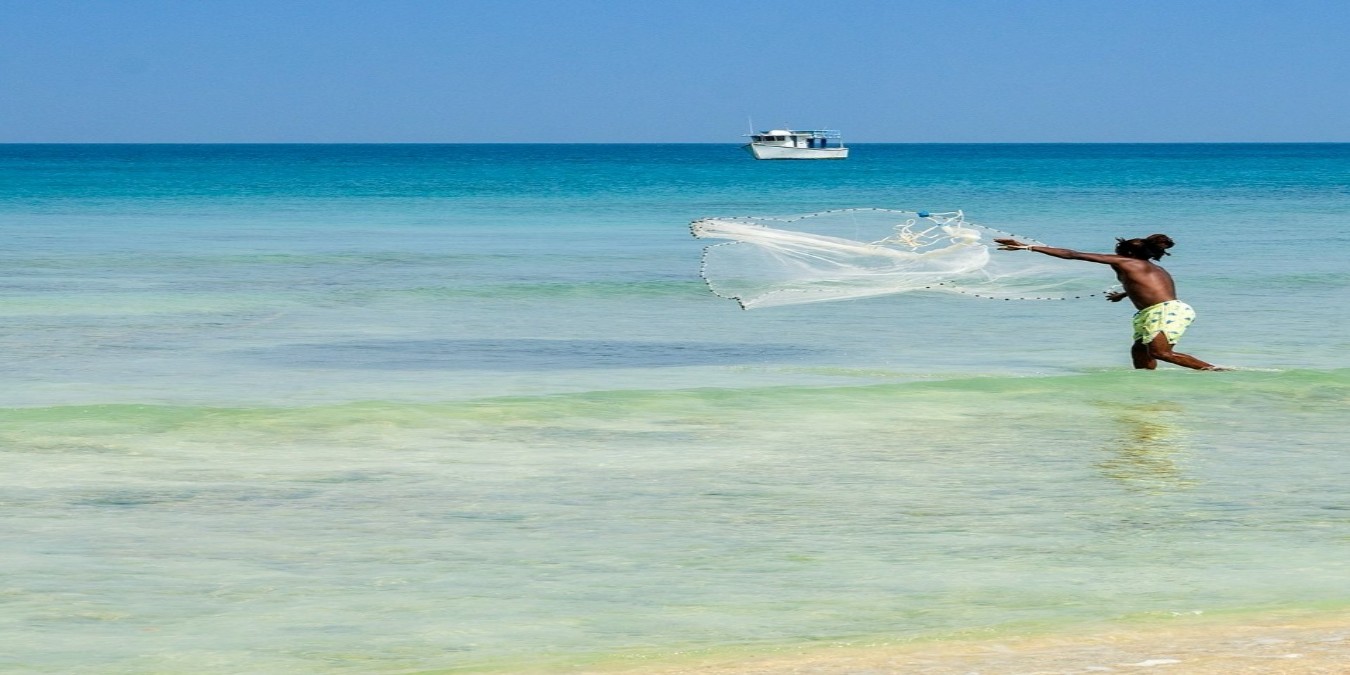
This photo captures more than a fisherman at work; it captures a living history, where culture, skill, and the rhythm of the Caribbean Sea come together in one timeless moment.
Comments