
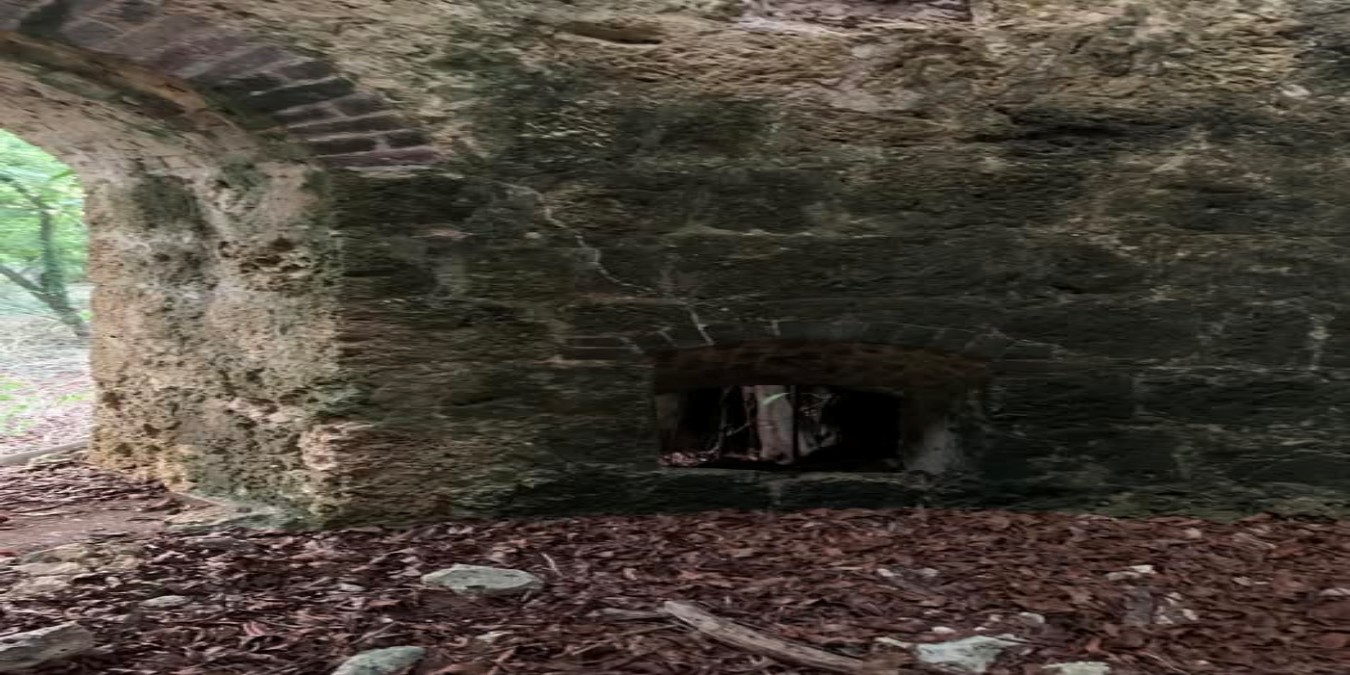
Located at Cove Estate in the Parish of St. Patrick, Tobago, this historic site reflects an important part of the island’s sugar production heritage. The photograph captures a bagasse opening built into the mill wall, designed specifically to support the industrial process of sugar manufacturing during the plantation era.
During cane processing, large quantities of crushed sugar cane fibre, known as bagasse, were produced as a by-product. To efficiently remove this material from the mill, engineers constructed outwardly sloping openings in the mill walls, allowing the bagasse to be expelled naturally from the crushing machinery.
Once removed, the bagasse was transported using carts to nearby sheds where it was dried and stored. Rather than being discarded, it played a vital role in the factory’s energy system, as it was later used as fuel in the boiler house furnaces. This reduced the need for firewood and made the sugar production process more efficient and self-sustaining.
This practical reuse of by-products highlights the ingenuity of Tobago’s early industrial systems and the importance of sugar production in shaping the island’s economic history.
Today, visitors interested in Tobago’s sugar heritage can explore sketches, models, and detailed exhibits of the sugar-making process at the Museum Buccoo.
Photo credit: Gabriele de Gaetano
Tobago Heritage Conservation Society
This is one of many heritage stories brought to life through Tour Tobago Ltd, which promotes Tobago’s historical sites, cultural landmarks, and local experiences through guided tours and digital storytelling.
Visitors can also explore more heritage locations, attractions, and local insights through Bago TT, where history, tourism, and local discovery come together in one platform.
Comments