
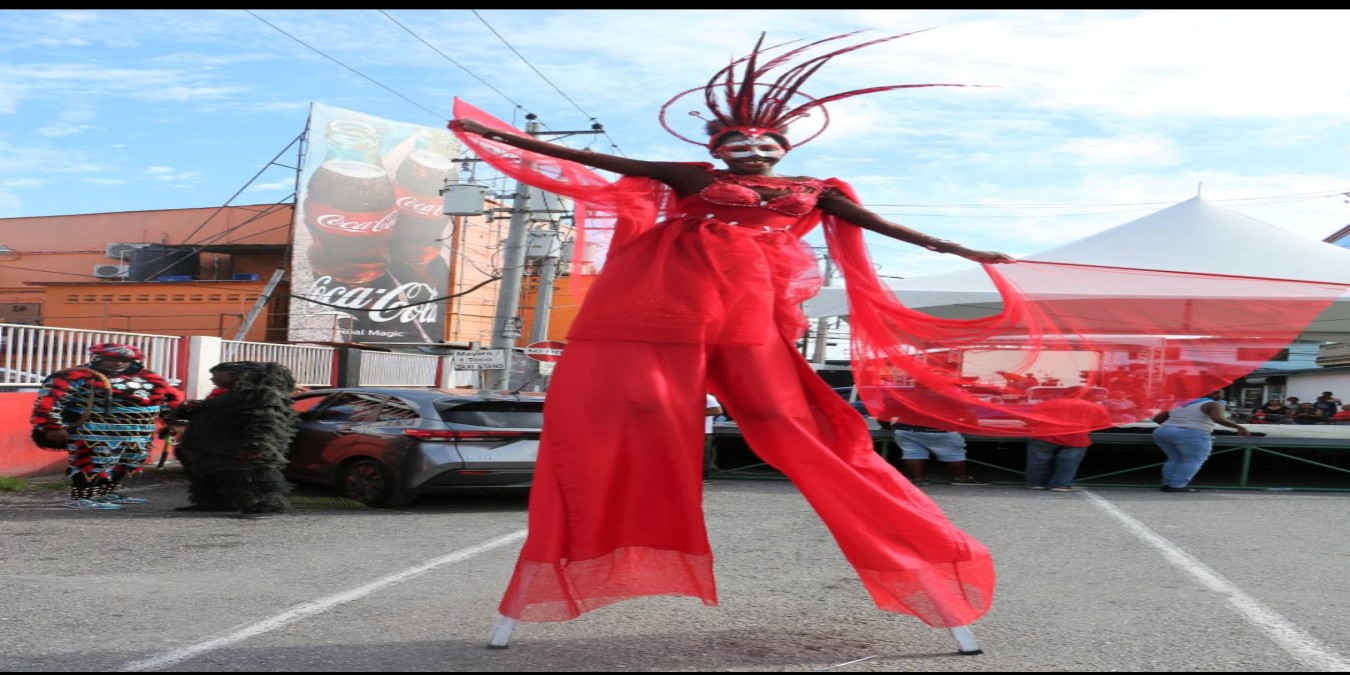
Towering above the streets of Carnival, the Moko Jumbie is one of the most powerful and enduring symbols of Trinidad and Tobago’s cultural heritage.
The name Moko is believed to originate from West African spiritual traditions, referring to a protector or healer, while Jumbie in Caribbean folklore refers to a spirit. Together, the Moko Jumbie represents a watchful ancestral guardian, standing high above the crowd to protect the community from harm and negative forces.
This tradition was brought to the Caribbean by enslaved Africans who, despite unimaginable hardship, preserved their spiritual beliefs through masquerade, music, and movement. Walking on towering stilts, the Moko Jumbie symbolized freedom, strength, and spiritual elevation, the ability to rise above oppression and see farther than others.
Historically, Moko Jumbies were believed to watch over villages, warn of danger, and guide the people. Their height was not only physical but also symbolic, representing wisdom, foresight, and a connection to the ancestors.
After Emancipation, the Moko Jumbie became an integral part of Carnival celebrations, evolving into a breathtaking display of balance, artistry, and creativity. Costumes grew more elaborate, blending African symbolism with vibrant Caribbean colours, flowing fabrics, mirrors, and feathers that move gracefully with every step.
Today, the Moko Jumbie remains a proud reminder of African survival, resistance, and cultural continuity in Trinidad and Tobago. More than entertainment, it is history brought to life, a living testament that our culture was never lost, only transformed.
Carnival is not just a celebration.
It is memory, movement, and meaning.
Comments