
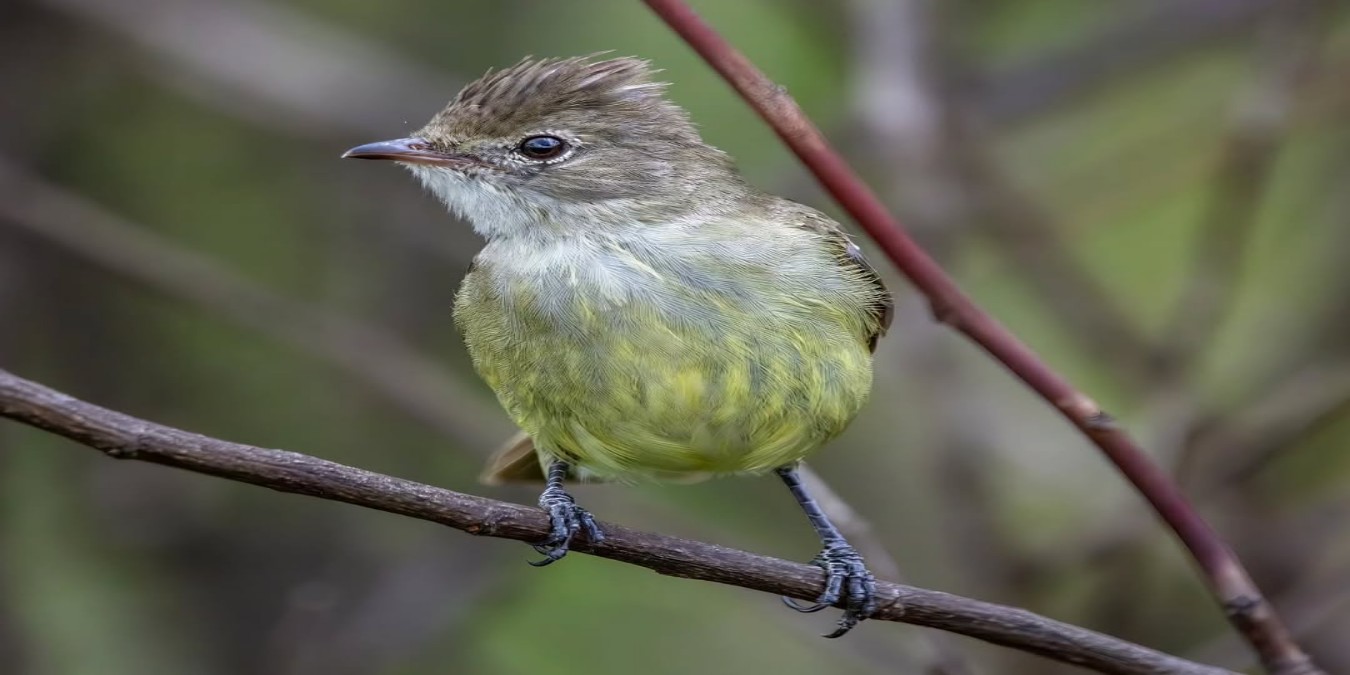
The Yellow-bellied Elaenia is one of Tobago’s most familiar yet often overlooked woodland birds. This small flycatcher exemplifies the island’s remarkable ability to support a diverse array of wildlife across forests, scrublands, wetlands, and even village edges. Found from lowland forests to gardens and mangroves, this adaptable species thrives wherever natural vegetation blends with open spaces, making it a quiet symbol of Tobago’s living landscapes.
For centuries, the Yellow-bellied Elaenia has moved through Tobago’s trees and shrubs, feeding on insects and small fruits while helping to maintain ecological balance. Its soft olive-brown plumage and pale yellow underparts allow it to blend effortlessly into the foliage, while its clear, whistled calls often give away its presence long before it is seen. Rather than relying on bright colours, this bird’s survival lies in subtlety, agility, and harmony with its surroundings.
Early Caribbean naturalists documented the Yellow-bellied Elaenia during early biological surveys of Tobago, noting its wide distribution and adaptability as evidence of the island’s healthy and diverse habitats. Its continued presence today reflects the resilience of Tobago’s ecosystems, especially where forests, wetlands, and open woodlands remain intact.
For birdwatchers and nature-loving travellers, encountering a Yellow-bellied Elaenia is a reminder that Tobago’s wildlife story is not only told through rare or dramatic species, but also through the steady rhythms of birds that have quietly shared the island’s landscapes for generations.
Comments