
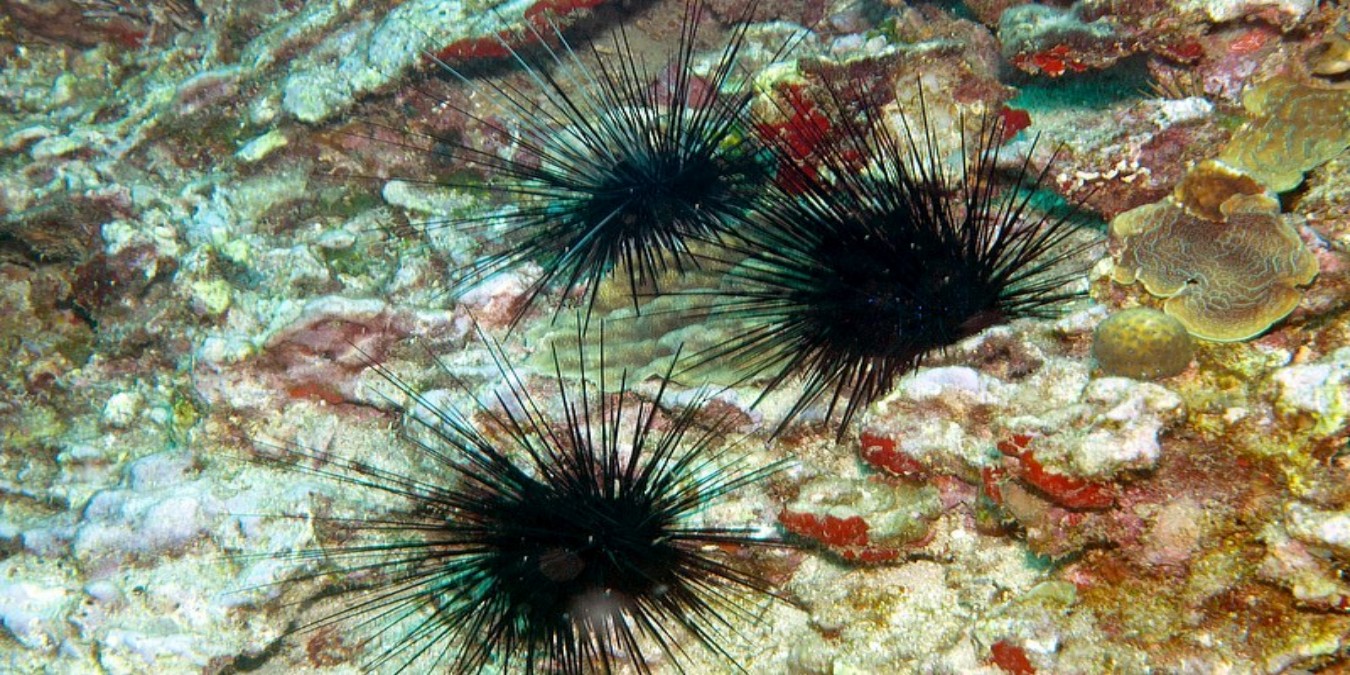
Hidden among the rocky crevices and coral gardens of Tobago’s reefs lives one of the island’s most important yet often overlooked marine caretakers, the sea urchin.
Recognized by its dark, needle-like spines, the sea urchin has existed in the world’s oceans for more than 450 million years, making it one of the oldest surviving marine animals on Earth. Tobago’s reefs have been shaped and sustained by these ancient creatures long before the island became known for diving, snorkelling, or tourism.
For centuries, sea urchins have quietly maintained Tobago’s reef systems by grazing on algae that would otherwise smother young corals. Moving slowly across the reef floor, they perform a vital ecological service, clearing space for corals to grow, breathe, and rebuild.
This constant grazing supports the formation of healthy reef structures, which provide shelter and breeding grounds for reef fish, lobsters, sea turtles, and numerous invertebrates. In turn, these reefs protect Tobago’s coastline by reducing wave energy and limiting erosion, safeguarding beaches and nearshore communities.
Local fishermen have long understood the value of sea urchins, recognising that areas rich in urchins often indicate healthier reefs and better fishing grounds. When sea urchin populations declined across the Caribbean in the late 20th century, reefs suffered, algae took over, and coral growth slowed dramatically. Their gradual return in Tobago’s waters is now seen as a powerful sign of reef recovery and resilience.
Today, the sea urchin stands as a silent guardian of Tobago’s marine heritage, continuing its ancient role in preserving the underwater ecosystems that sustain biodiversity, fisheries, and eco-tourism alike.
Comments