
The White-tailed Nightjar (Hydropsalis cayennensis) is one of Tobago’s most fascinating nocturnal birds, quietly woven into the island’s natural and cultural history. Known locally for its ghost-like presence at dusk and dawn, this nightjar has long been associated with mystery, folklore, and the untouched wild landscapes of Tobago.
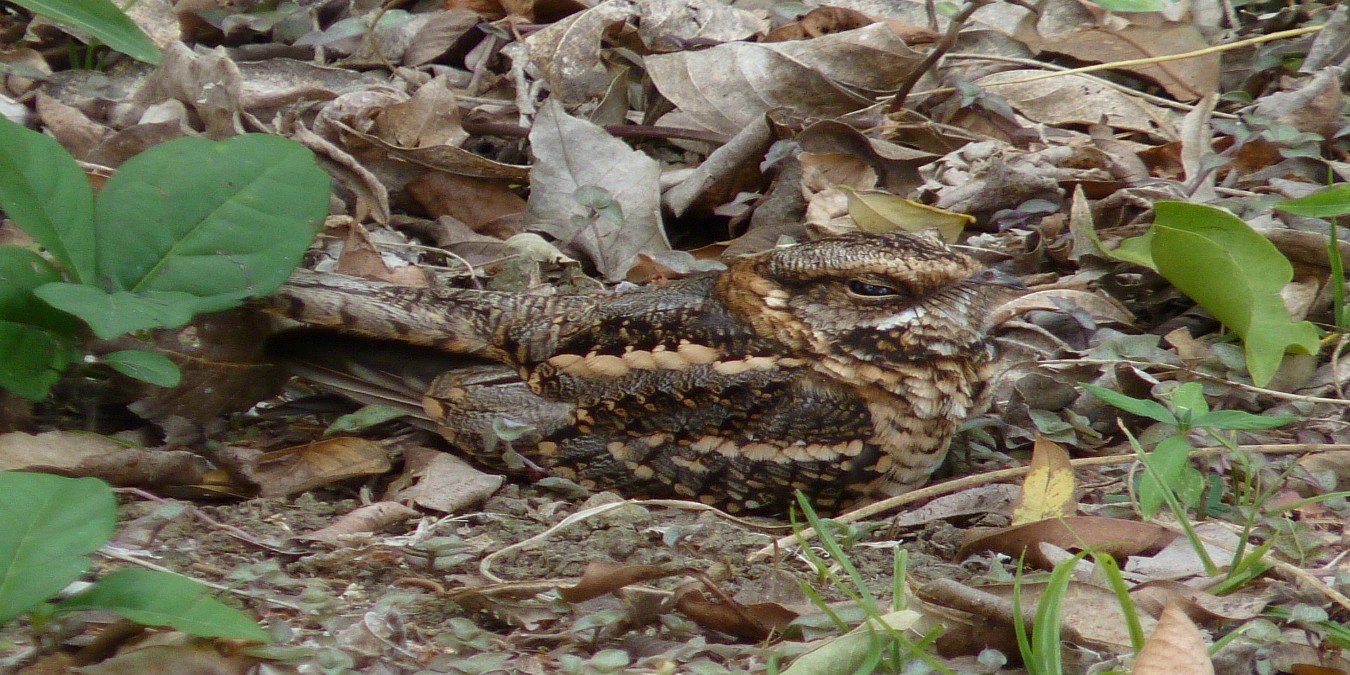
Historically, the White-tailed Nightjar thrived in Tobago’s dry forests, open woodlands, forest edges, and coastal scrublands, especially where leaf litter provides perfect camouflage. Unlike many birds, it does not build a nest. Instead, it lays its eggs directly on the forest floor, relying on its remarkable mottled plumage as seen in this photo to blend seamlessly into fallen leaves and earth. Early naturalists often overlooked the bird entirely, mistaking it for part of the forest floor.
The species became known to scientists in Tobago during early Caribbean ornithological surveys of the 19th and early 20th centuries, when researchers documented the island’s rich biodiversity. Tobago’s relatively low deforestation compared to other Caribbean islands allowed the White-tailed Nightjar to remain a stable resident species, making the island an important refuge for the bird.
At night, the White-tailed Nightjar comes alive. It hunts moths, beetles, and other flying insects using wide, silent wings and exceptional night vision. Its soft, echoing calls drifting through the darkness have inspired local stories, with some folklore describing the bird as a guardian of the forest or a messenger between night and dawn.
Today, the White-tailed Nightjar is a highlight for birdwatchers and eco-tourists visiting Tobago, particularly in protected areas and quiet rural landscapes. Its presence is a reminder of Tobago’s enduring natural heritage, where wildlife still thrives in harmony with the land.
Comments