
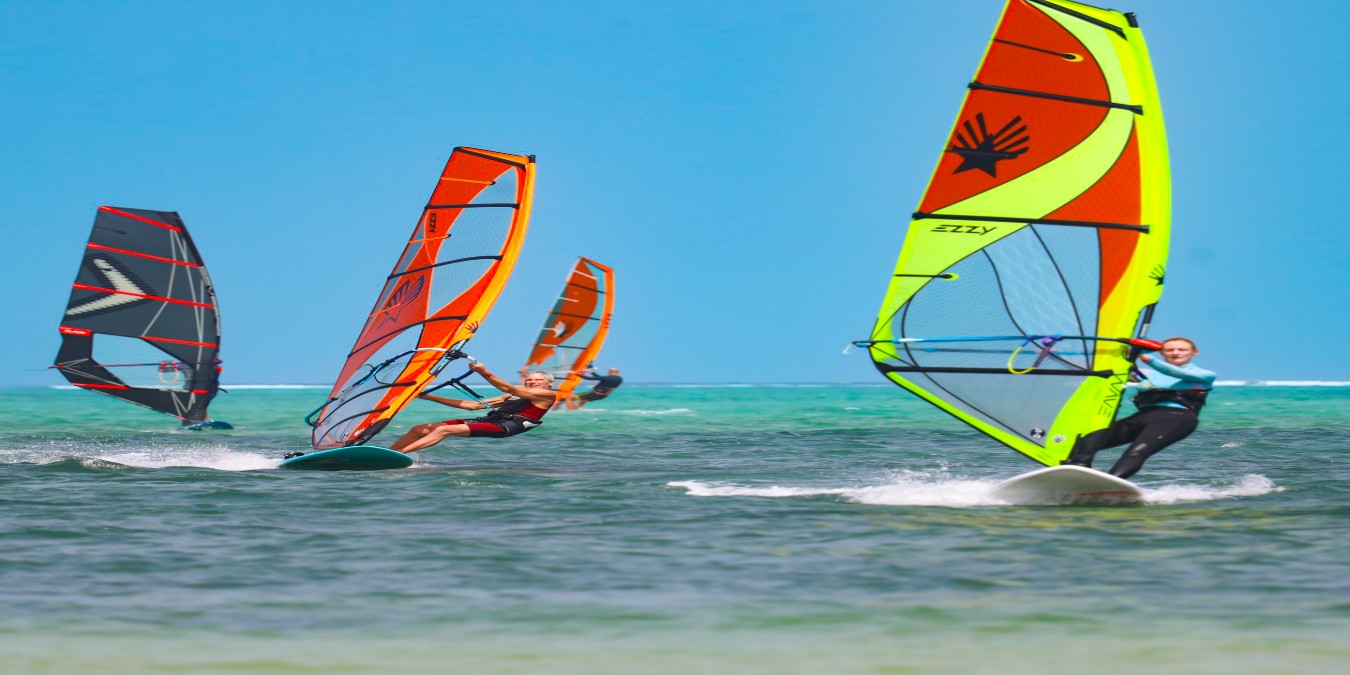
Windsurfing found its way to Tobago in the late 1970s and early 1980s, when adventurous sailors and water-sport enthusiasts discovered the island’s steady trade winds, warm Caribbean waters, and protected bays. Tobago’s unique geography, especially along the southwest coast, created ideal conditions for both beginners and experienced riders, with consistent breezes and relatively calm seas.
Locations such as Pigeon Point quickly became natural playgrounds for windsurfing. These areas offered shallow waters, wide open space, and reliable wind patterns, making Tobago one of the Caribbean’s quiet gems for the sport. Visiting Europeans and international instructors helped introduce modern equipment and training, while locals soon embraced windsurfing as part of the island’s growing water-sports culture.
By the 1990s and early 2000s, windsurfing had firmly established itself as a staple activity in Tobago’s tourism scene, often offered alongside sailing, kayaking, and snorkelling. Today, it remains a symbol of Tobago’s adventurous side, blending sport, nature, and island freedom, and continues to attract travellers seeking an authentic, wind-powered experience on the Caribbean Sea.
Comments