
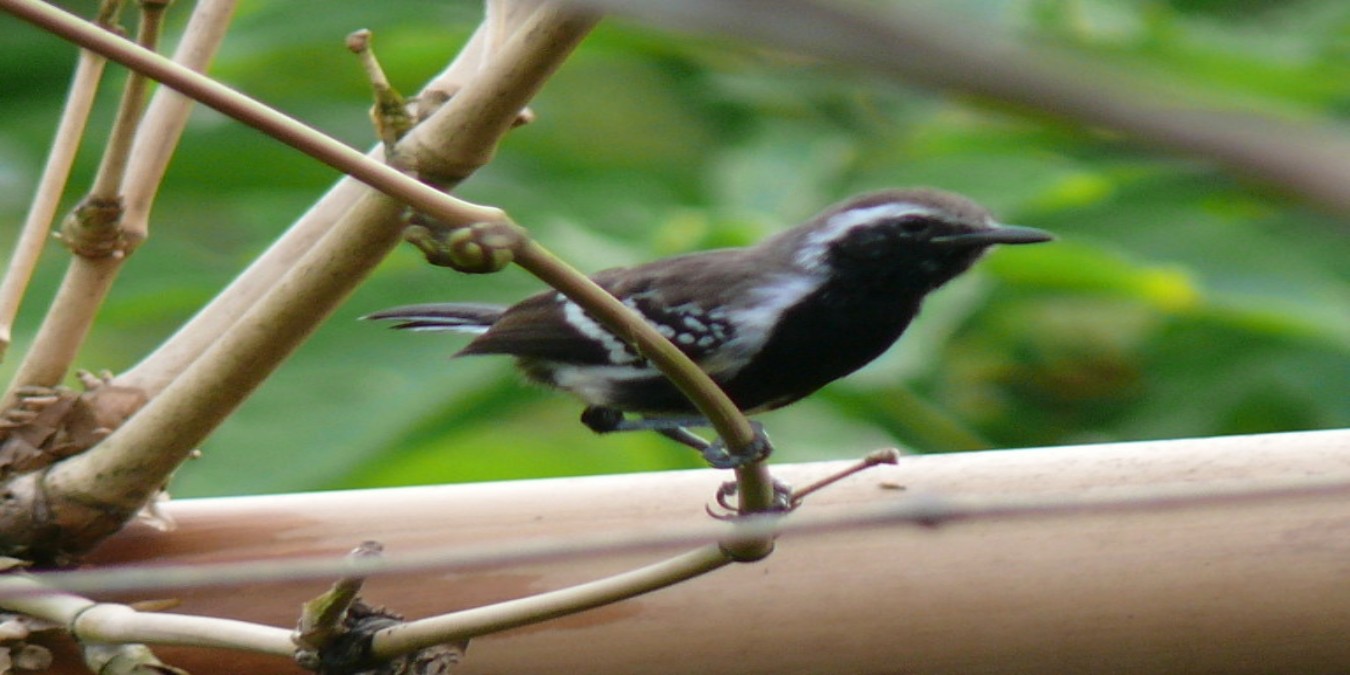
Small, shadow-dark, and endlessly curious, the White-fringed Antwren moves through Tobago’s forest edges like a living whisper. It slips between vines and branches with nervous energy, its soft white fringes flashing briefly against deep brown plumage, a subtle contrast easily missed by the untrained eye, but unforgettable once seen.
This bird does not announce itself boldly. Instead, it reveals itself in fragments: a quick flutter, a sharp flick of wings, a faint rustle in the undergrowth. Low in the vegetation, it hunts with precision, plucking insects from leaves and stems, a tireless guardian of balance in Tobago’s ecosystems.
Within the shaded trails of the Main Ridge Forest Reserve, the oldest protected rainforest in the Western Hemisphere, the White-fringed Antwren thrives. Here, in the dappled light beneath towering trees, its rapid movements mirror the pulse of the forest itself, restless, alive, interconnected.
Its call is soft but persistent, a thin, buzzing note threading through the silence, reminding those who listen that life is always unfolding just beyond sight. This tiny bird, born of South America’s ancient lineage, found its way to Tobago long before human footsteps marked the island, a testament to the deep natural history that binds land, sea, and sky.
The White-fringed Antwren is not a spectacle meant to be chased. It is a reward for patience. A symbol of Tobago’s quieter wonders. A reminder that the island’s greatest stories are often told in hushed tones, among leaves, shadows, and the unseen rhythms of the wild.
Comments