
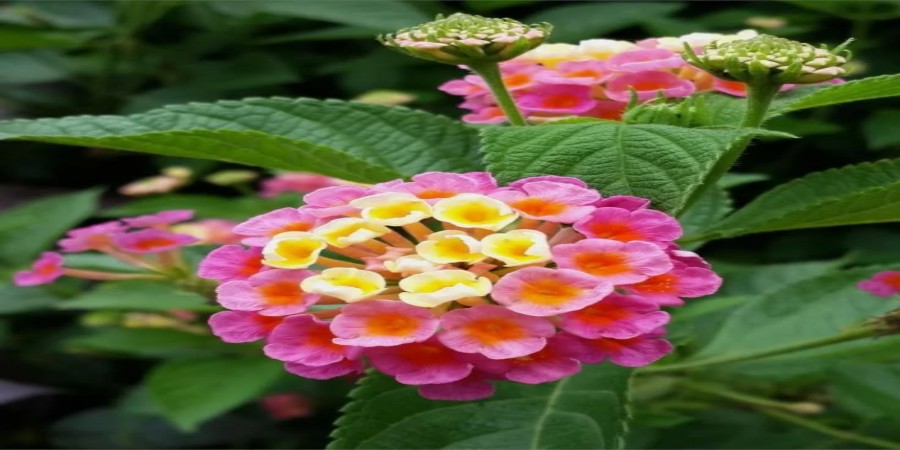
The Lantana flower (Lantana camara), though often admired for its vibrant clusters of red, yellow, orange, and pink blooms, is not native to Tobago. Originating in the tropical regions of Central and South America, the species was introduced to the Caribbean during the late 18th and 19th centuries, a period characterized by extensive botanical exchange driven by colonial gardening, estate landscaping, and agricultural experimentation.
In Tobago, lantana found ideal conditions for establishment. The island’s warm climate, seasonal rainfall, and disturbed landscapes, particularly abandoned estates, roadside verges, and regenerating farmland, allowed the shrub to spread rapidly beyond cultivated gardens. Over time, it naturalized across much of the island, becoming a familiar feature of dry forests, hillsides, and coastal scrublands.
Once established, lantana proved remarkably resilient. Its ability to flower year-round, produce abundant seeds, and regenerate quickly after cutting or fire allowed it to dominate open spaces. Dense thickets often form, limiting the growth of native plant species and altering local ecosystems. For this reason, lantana is now classified as an invasive species in Tobago and across much of the Caribbean, presenting ongoing challenges for conservation and land management efforts.
Despite its invasive nature, lantana has long held a place in local traditional knowledge. In Tobago and Trinidad, parts of the plant have been used in folk remedies, particularly in herbal teas and poultices, though modern research also highlights its potential toxicity if misused. Its strong scent and hardy branches made it useful as a natural hedge around homes and gardens, further contributing to its widespread distribution.
Ecologically, lantana occupies a complex role. While it suppresses native vegetation, its flowers are a valuable nectar source for butterflies, bees, and other pollinators, making it visually lively and ecologically active in otherwise degraded areas. This dual identity, both disruptive and supportive, has made lantana a subject of continued ecological study within island environments.
Today, the lantana flower stands as one of Tobago’s most recognizable wild shrubs, its colorful blooms masking a deeper history of human introduction, environmental adaptation, and ecological consequence. It serves as a living reminder of how ornamental plants, once brought for beauty alone, can permanently reshape the landscapes of small tropical islands.
Comments