
The Balsa tree (Ochroma pyramidale), though widely associated with Central and South America, has become a well-established component of Tobago’s secondary forests. Native to regions such as Ecuador, Colombia, and Guatemala, the species was introduced to the Caribbean during the 19th and early 20th centuries, a period marked by active botanical exchange among colonial territories. Tobago’s warm climate, fertile soils, and high humidity created ideal conditions for the tree to naturalize and thrive.
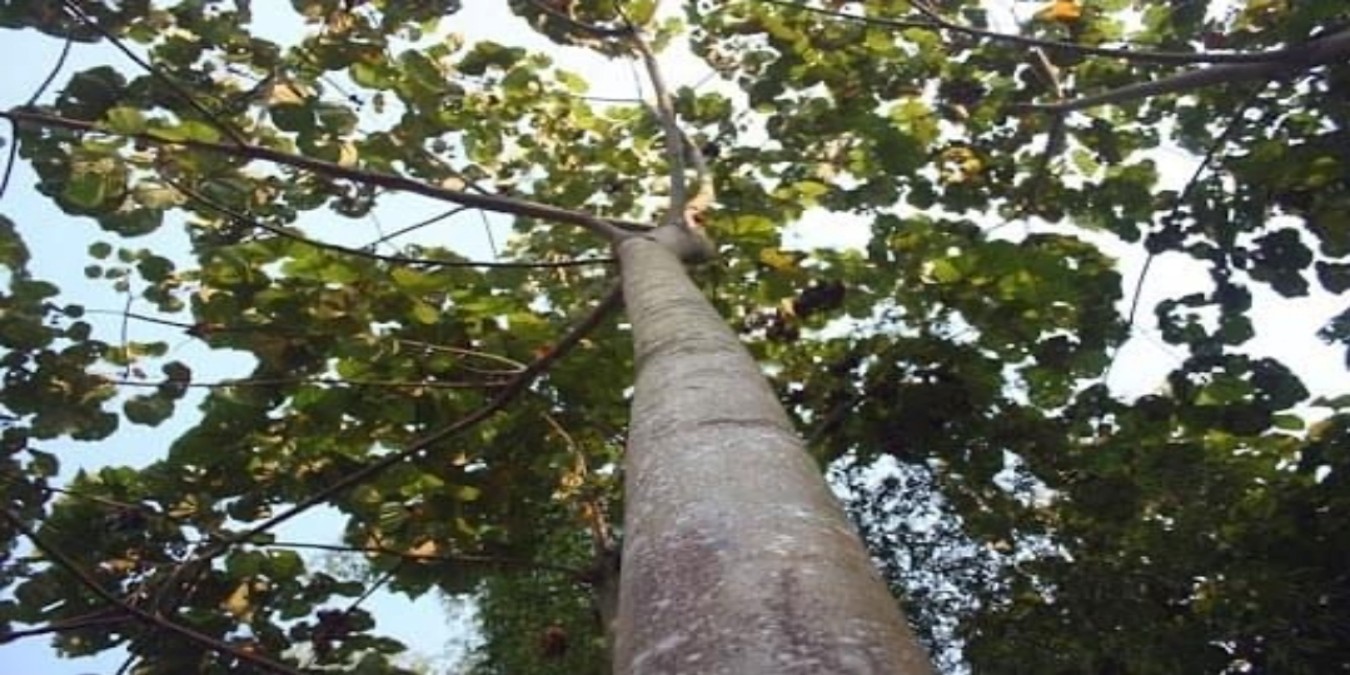
Once introduced, the Balsa tree spread rapidly across disturbed landscapes, including abandoned agricultural plots, forest margins, and regenerating woodlands. Its exceptionally fast growth rate and towering, straight trunk make it easily recognizable in Tobago’s natural scenery.
While Tobago never developed a large-scale Balsa industry, the wood has long held practical value for local artisans and fishers. It's remarkable lightness. Balsa is the world’s lightest commercial timber, making it suitable for crafting fishing floats, simple rafts, carved ornaments, and school projects. Though small in scale, these uses reflect the tree’s versatility and cultural integration.
Beyond its human utility, the Balsa tree plays an important ecological role. It is classified as a pioneer species, meaning it is among the first to recolonize disturbed land, providing shade and protection for slower-growing native species. Its flowers produce abundant nectar, supporting bats, bees, and a variety of bird species, thereby contributing to the island’s biodiversity.
Today, the Balsa tree stands as a familiar presence across Tobago’s hillsides and forest edges, an introduced species that has woven itself into the island’s ecological and cultural fabric. Its imposing height, broad leaves, and ecological resilience continue to make it one of the more distinctive trees encountered in Tobago’s natural environment.
Comments