
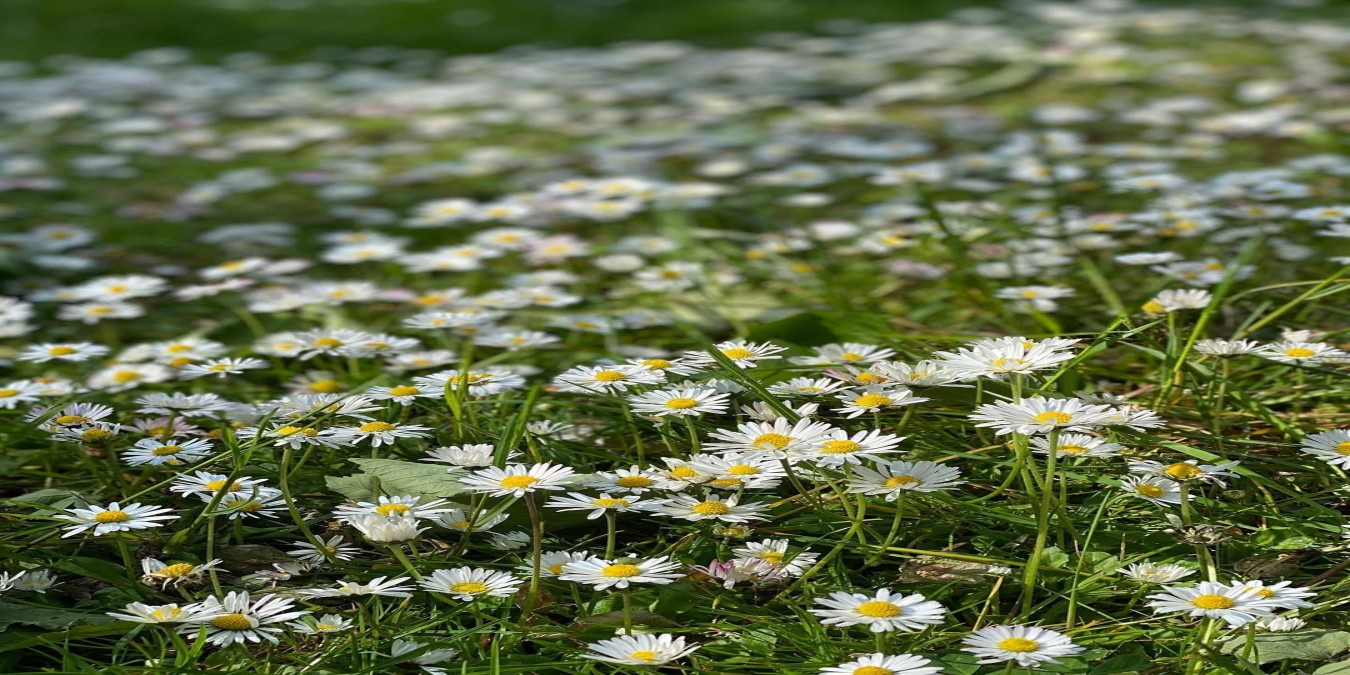
In Tobago, the simple white daisy has long carried a quiet kind of symbolism, a flower of rest, purity, and peaceful return to the earth. Though not originally native to the island, these tiny blooms began spreading naturally through old estates, abandoned fields, and yes, historic village graveyards where the soil remained cool and undisturbed.
By the late 1800s and early 1900s, as Tobagonian families maintained small community burial grounds beside churches and village paths, daisies were among the first flowers to reappear after the rains. They became known locally as “graveyard daisies,” not for anything morbid, but because they symbolised nature's gentle reclaiming of sacred spaces.
Over time, the flowers came to symbolize:
Remembrance – honouring ancestors quietly without elaborate monuments.
Renewal – the belief that life continues in cycles, just as daisies bloom each season again.
Peace – their soft white petals are seen as a sign of eternal rest and spiritual calm.
Today, when daisies carpet a Tobagonian hillside or an old churchyard after rainfall, many elders see them as a blessing, a reminder that the land remembers every story, every life, every name.
Comments