
The White-tailed Sabrewing: Tobago’s Resilient Jewel
Length: 13 cm (5 inches)
Once teetering on the edge of extinction after the catastrophic 1963 hurricanes devastated Tobago’s hill forests, the White-tailed Sabrewing (Campylopterus ensipennis) has made a remarkable comeback. Today, this striking hummingbird can be reliably observed along sections of the Main Ridge Forest, a testament to effective conservation and ecological stewardship.
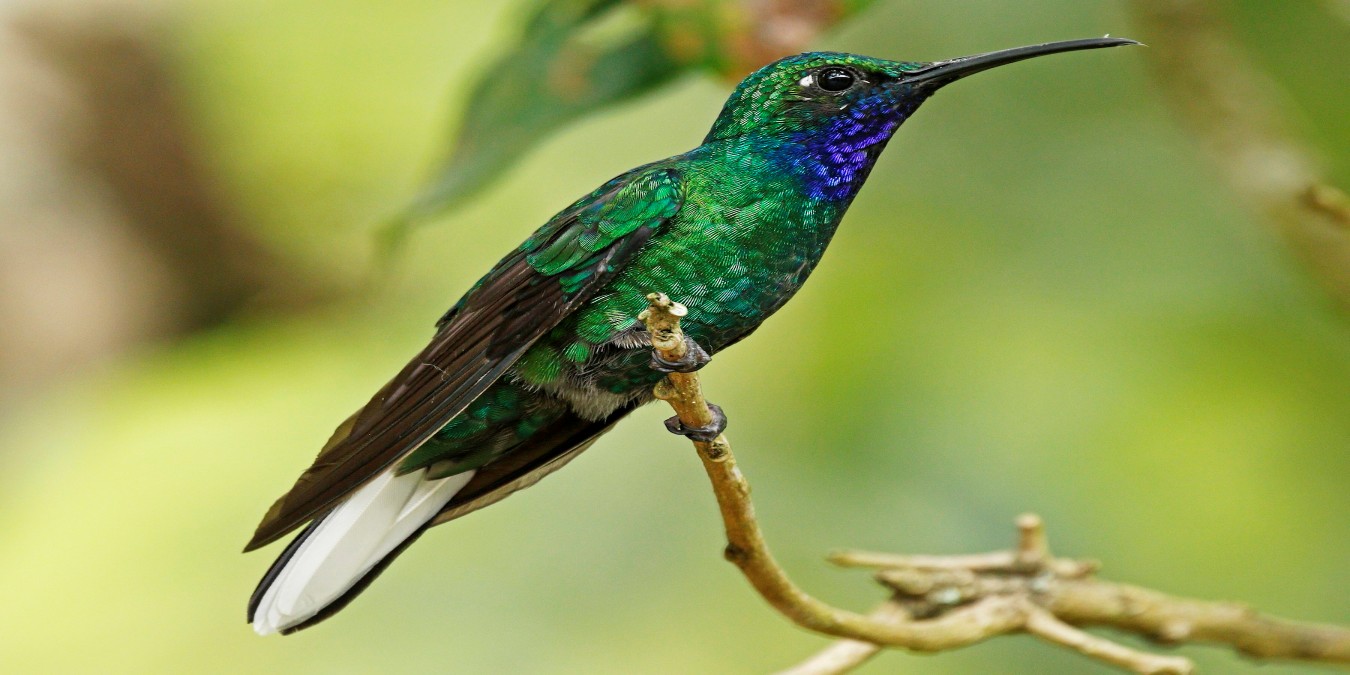
Predominantly emerald-green with a shimmering violet-blue throat, its most striking feature is the largely white outer tail, a brilliant flash visible in flight. The slightly decurved, elongated bill allows it to forage expertly among forest flora, especially bromeliads, and capture small flying insects. Males are highly territorial during the breeding season, delivering a loud, persistent “crreeet” from their song perches, while females exhibit subtler, muted underparts.
Nesting behaviour is exceptional yet rarely observed: females construct substantial cup-shaped nests from moss, narrow leaves, and rootlets, solely responsible for incubation and feeding. The White-tailed Sabrewing’s story from near disappearance to careful recovery serves as an inspiring case study in conservation, highlighting how human dedication can safeguard Tobago’s unique wildlife heritage.
Comments